Skip to content

Living Room Interiors

Pooja unit design

A pooja unit is a small piece with a big role. It needs to be quiet and respectful, practical for daily use and safe around a lamp or incense. We design pooja units to suit your home, your tradition and the space you have, then build them to measure.Whether you want a simple wall shelf, a unit with doors or a carved-look panel, we plan the size, position, storage and ventilation together.
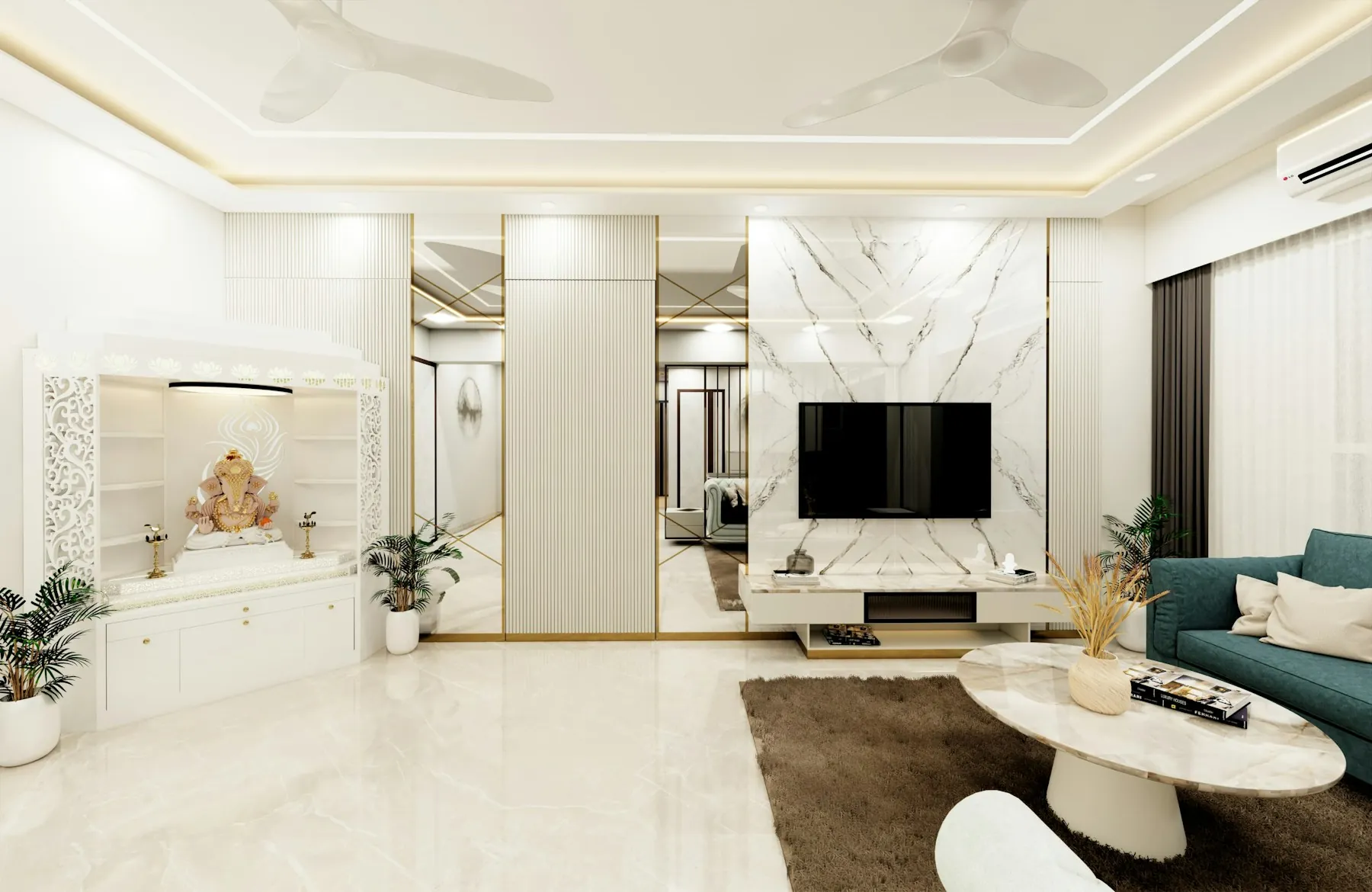
White living room with a carved pooja unit, a marble TV wall and a cove-lit false ceiling

01Fit

Is it right for your home?

Works best when

  • Homes with a living room, a dedicated corner or a niche for prayer
  • Families who use a lamp and incense daily and need a safe surface
  • Owners who want a closed unit that hides the shrine when not in use
  • Flats where space is limited and a wall-mounted unit makes sense
  • Homes that want the pooja unit to match the rest of the woodwork

Worth considering

  • A lamp and incense need a heat-resistant surface and good ventilation.
  • Many families avoid placing a shrine under a staircase or on a wall shared with a bathroom.
  • The position is a personal and family choice. We fit the unit to your layout and your preference.
  • Storage for samagri, books and spare lamps keeps the main shelf uncluttered.
  • A wall-mounted unit needs a solid wall, particularly if it will carry idols.

02Design ideas

Ideas to start from

  • Wall-mounted unit with doors

    A compact cabinet with a hinged or folding door that closes the shrine when you are not using it.

  • Floor unit with storage below

    A base cabinet with drawers for samagri, matches and books, and an open shelf above for the idols.

  • Jali or carved-look back panel

    A patterned back panel, backlit gently, gives the shrine a quiet focal point.

  • Marble or stone platform

    A heat-resistant base that is easy to clean and does not stain with oil or kumkum.

  • Glass-door unit

    Glass doors keep dust off the idols and let you see the shrine without opening it.

  • Recessed niche in a wall

    Where the wall allows, a niche saves floor space and keeps the shrine flush with the room.

  • Pooja unit within a partition

    A slatted partition that carries a shrine on one side and open shelves on the other.

  • Small corner shrine

    A slim, triangular or floating shelf that fits the corner of a compact flat.

03Materials

Materials and finishes

Base and platform
Marble, granite or a heat-resistant stone surface where lamps are lit. This is the most important choice for safety.
Carcass
Plywood or HDHMR, with a moisture-resistant board if the unit is near a window or balcony.
Shutters and panels
Veneer or laminate in a warm wood tone, solid-wood-look carved panels, or jali screens in MDF or metal.
Lighting
Warm white LED lights above or behind the idols, kept away from the flame and any fabric.
Hardware
Soft-close hinges and brass-look handles that match the rest of the home.

04Planning

Sizing and planning notes

Height of the platform
Many families prefer the idol shelf at around chest height, roughly 900 to 1,200 mm from the floor, so that the idols are at a respectful level and can be reached easily.
Typical size
A wall unit is commonly 600 to 900 mm wide and 300 to 450 mm deep. A floor unit is often 900 to 1,200 mm tall with storage below.
Direction
Many families prefer the north-east or east of the home and the idols facing east or west. We share this as a convention, and fit your preference.
Ventilation and fire safety
Keep a gap above the lamp, avoid timber directly beside the flame and provide a vent or open back so smoke does not stain the wall.
Wall strength
A brick or concrete wall can carry a wall-hung unit. A hollow partition needs a reinforced fixing or a floor-standing unit.

05Inspiration

Illustrative photos to show styles and ideas. They are not our completed projects.
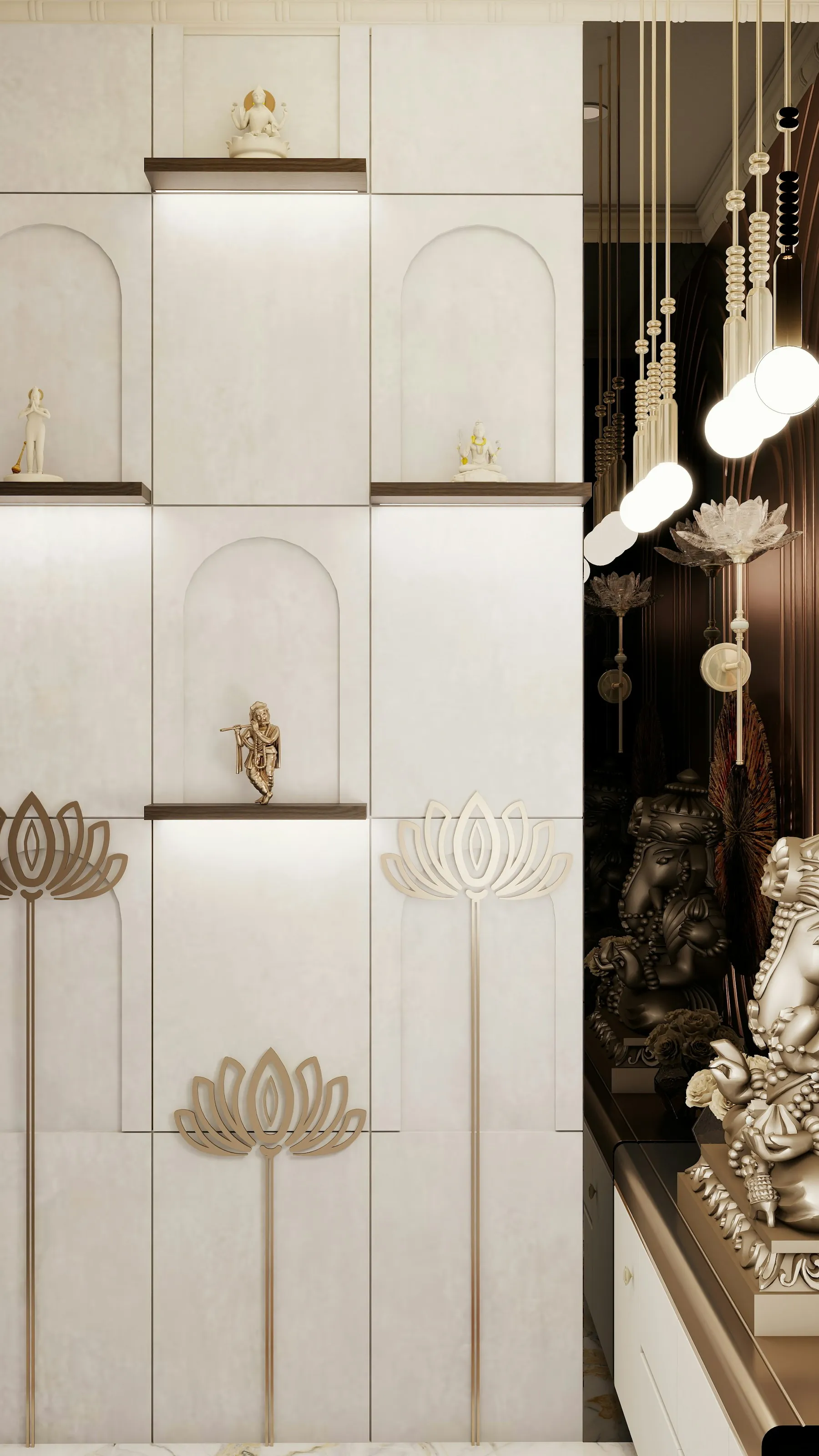
Pooja wall in ivory panels with arched niches, lit shelves and brass lotus motifs
White living room with a carved pooja unit, a marble TV wall and a cove-lit false ceiling

06FAQ

Pooja unit design: your questions

What is the ideal height for a pooja unit?

Many families prefer the idol shelf at about chest height, roughly 900 to 1,200 mm from the floor, so the idols sit at a comfortable, respectful level. We adjust it for the people who use it, including elderly family members.

Which direction is best for a pooja unit?

Many families prefer the north-east or east of the home. Not every flat allows it, and we fit the unit to your layout and what your family follows.

Can a pooja unit be placed in the living room?

Yes, a wall-mounted or floor unit works well in a living room. A unit with doors lets you close it when not in use, so the room can serve guests.

What material is safest for a pooja unit with a lamp?

A marble or granite platform under the lamp, with a gap above it and no fabric nearby. The rest of the unit can be wood-based, kept away from the flame.

How do I avoid smoke stains on the wall?

Plan ventilation, keep the flame away from the back panel and use a washable finish or a tile or stone panel behind the lamp.

How much does a pooja unit cost?

It depends on the size, the materials and the detail work. We give an itemised estimate after the site visit, and a pooja unit is part of our Signature package.

Free consultation

Get a free estimate for your pooja unit design

Share a few details and we will call you to plan a site visit. The consultation is free.

Want to share budget, size or site photos? Use the full form

Keep exploring

More from Living Room Interiors

Jubilant Interior
Free estimate

+91 74089 71354
jubilantinterio740@gmail.com