Skip to content

Wardrobes & Storage

Hinged wardrobe design

A hinged wardrobe uses doors that swing open on hinges, the classic and most flexible kind of wardrobe. When the doors open, the whole width is in front of you, so everything is easy to see and reach.We design hinged wardrobes to suit your room and your clothes, then build and install them with our own team.
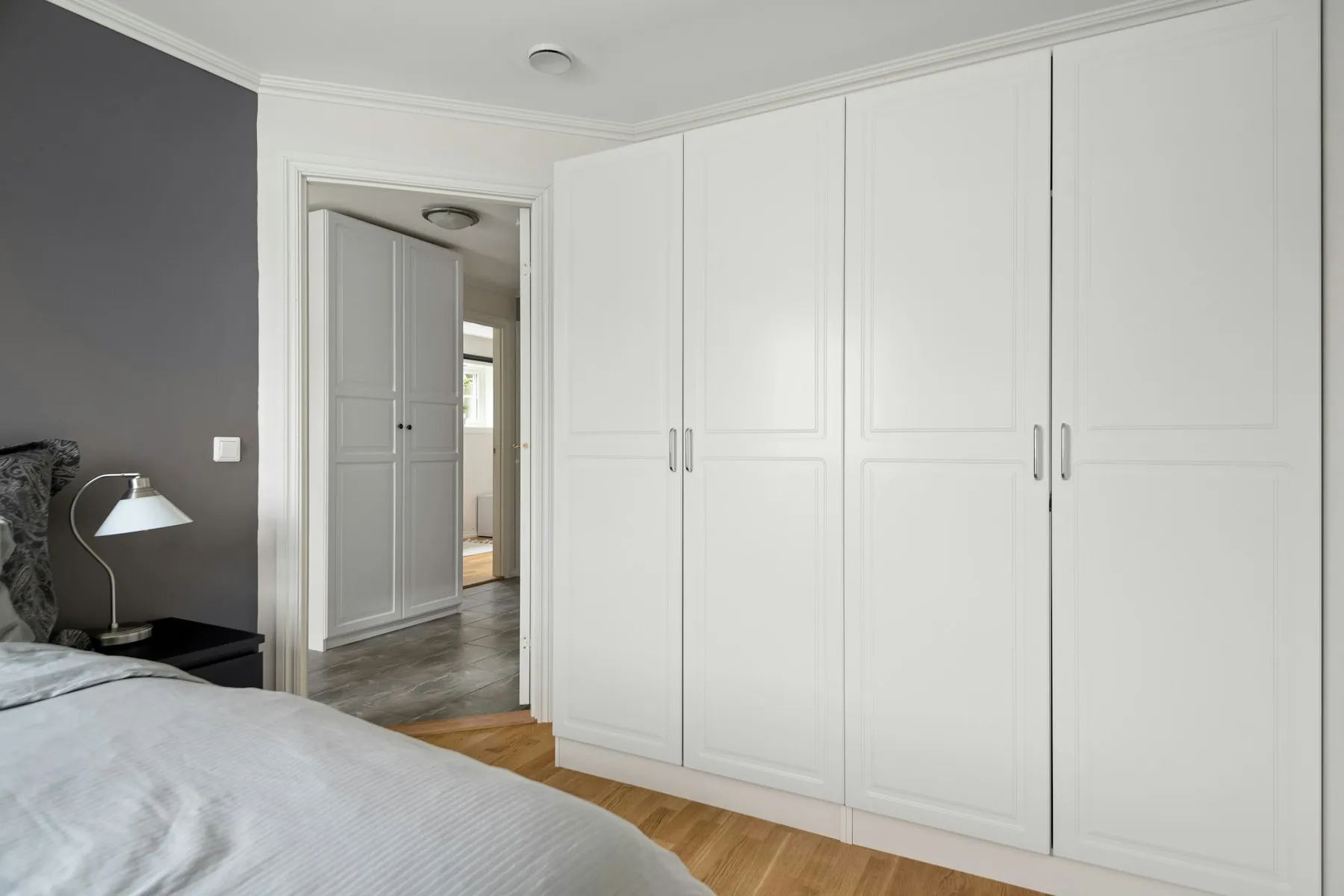
White hinged-door wardrobe with panelled shutters along a bedroom wall

01Fit

Is it right for your home?

Works best when

  • Bedrooms with enough clear floor for the doors to open
  • Owners who want full access to the entire wardrobe at once
  • Homes that want a choice of shutter styles, including veneer, PU paint and panels
  • Wardrobes with corner returns or L-shaped layouts
  • Households that prefer simple, repairable hardware

Worth considering

  • Doors need swing space in front, roughly the width of one door.
  • Wide doors put more load on the hinges, so narrower doors last better.
  • A door that hits the bed, a window or a switchboard is a planning mistake we check for.
  • More doors mean more joints, so quality of the hinge and alignment matters.
  • Soft-close hinges are worth the cost in a wardrobe used every day.

02Design ideas

Ideas to start from

  • Ceiling-height wardrobe with a loft

    Tall doors with a row of lofts above uses the whole wall for storage.

  • Panelled or grooved shutters

    A classic look with shaped lines, in laminate, veneer or PU paint.

  • Handleless push-to-open doors

    A clean front with no handles, suited to modern rooms.

  • Mirror on one shutter

    A full-length mirror panel on one door gives a dressing mirror without a separate stand.

  • Open niche or shelf

    An open section in the middle for a lamp, a bag or decor breaks up the front.

  • Corner wardrobe

    A wardrobe that wraps round a corner uses space that would otherwise be wasted.

  • Drawers at the centre

    A bank of drawers between hanging sections keeps folded items easy to reach.

  • Tall units for shoes and bags

    A narrow hinged unit by the door takes shoes, bags and umbrellas.

03Materials

Materials and finishes

Carcass
Good plywood, with moisture-resistant board on outer walls and near balconies.
Shutters
Laminate for durability, veneer for natural grain, PU paint for chosen colours, acrylic for a glossy look.
Hinges
Soft-close hinges rated for the weight of the shutter, and three hinges on tall doors for stability.
Handles
Metal or wood handles, or integrated grooves for a handleless look.
Interior
Light laminate, sturdy rails, shelves with enough support and drawers on full-extension channels.

04Planning

Sizing and planning notes

Door width
Hinged shutters are commonly 450 to 600 mm wide. Wider doors can sag over time, so narrower ones are a safer choice for tall wardrobes.
Swing space
A door needs clear floor roughly equal to its width. Leave 500 to 600 mm in front, and check that doors do not hit the bed, the door or a window.
Depth and height
Depth is typically about 600 mm. Height runs to 2,100 mm or to the ceiling, with a loft above for suitcases.
Hanging space
Allow about 1,200 mm of height for long garments and about 900 mm for shirts, with shelves, drawers and a loft for the rest.
Hinge count
Taller or heavier doors need three hinges rather than two. We specify the count when we draw the shutters.

05Inspiration

Illustrative photos to show styles and ideas. They are not our completed projects.
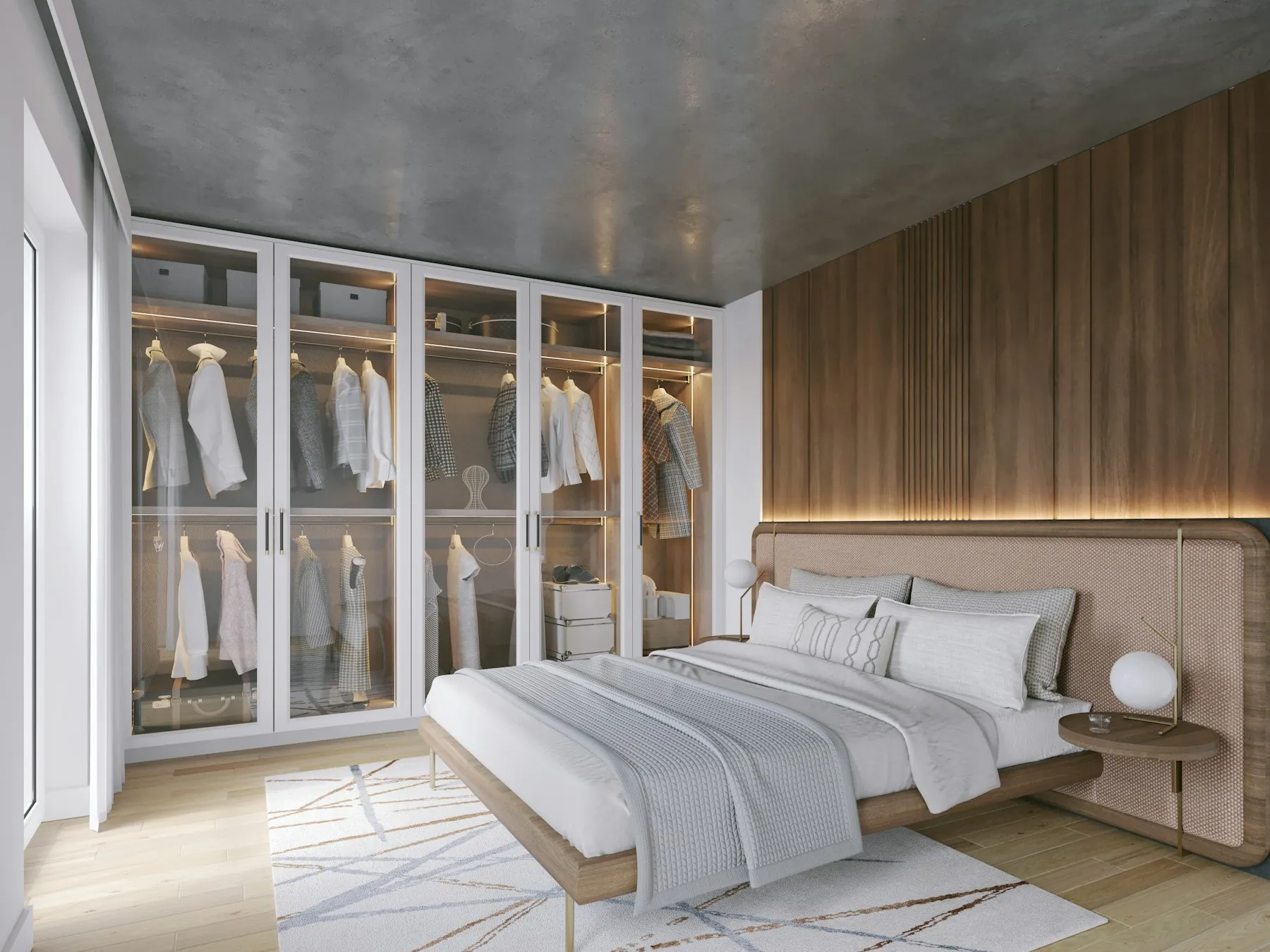
Bedroom with a full wall of glass-shutter wardrobes, lit from inside, beside a timber-panelled bed wall
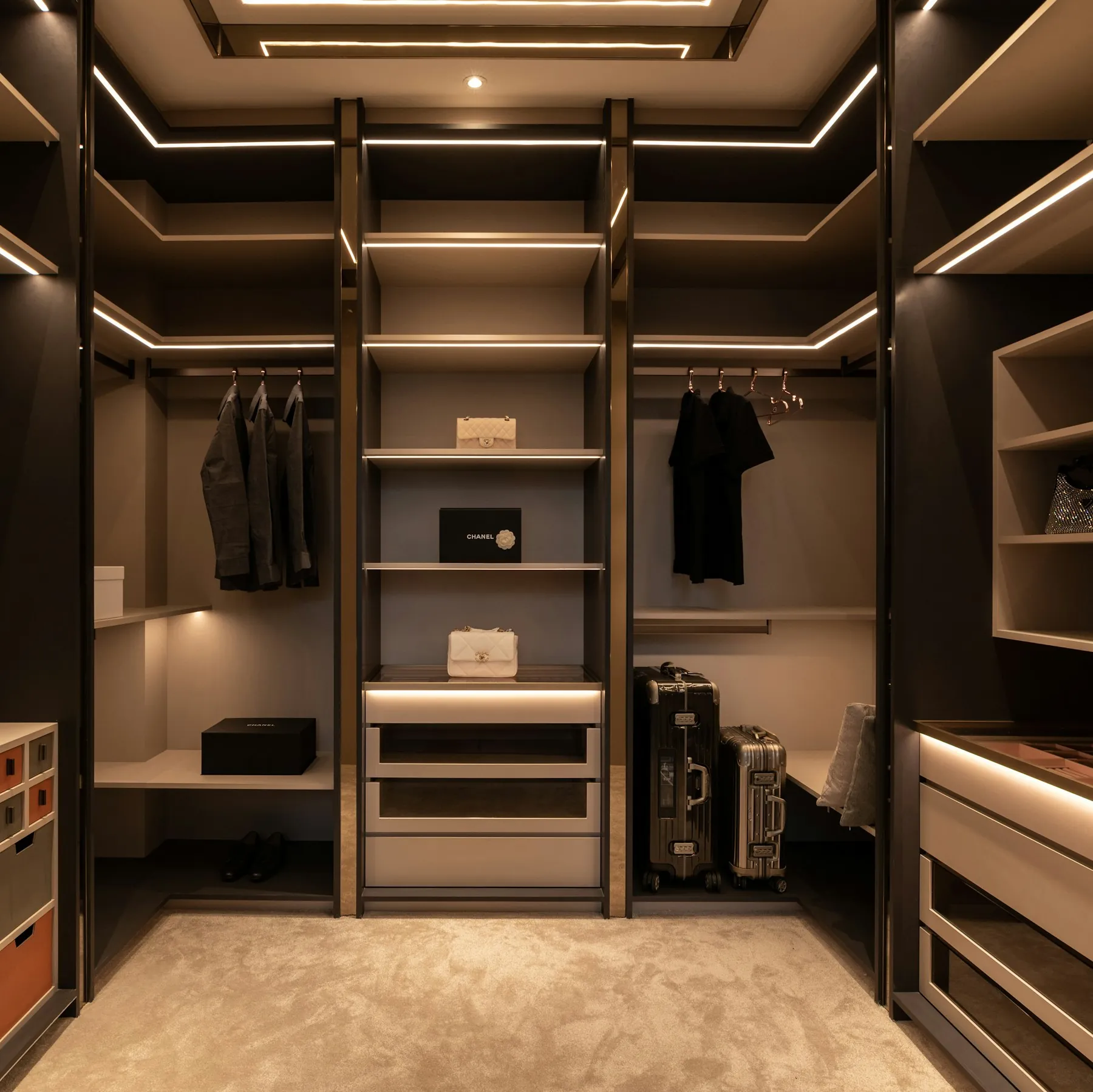
Walk-in wardrobe with open hanging rails, drawers and warm strip lighting
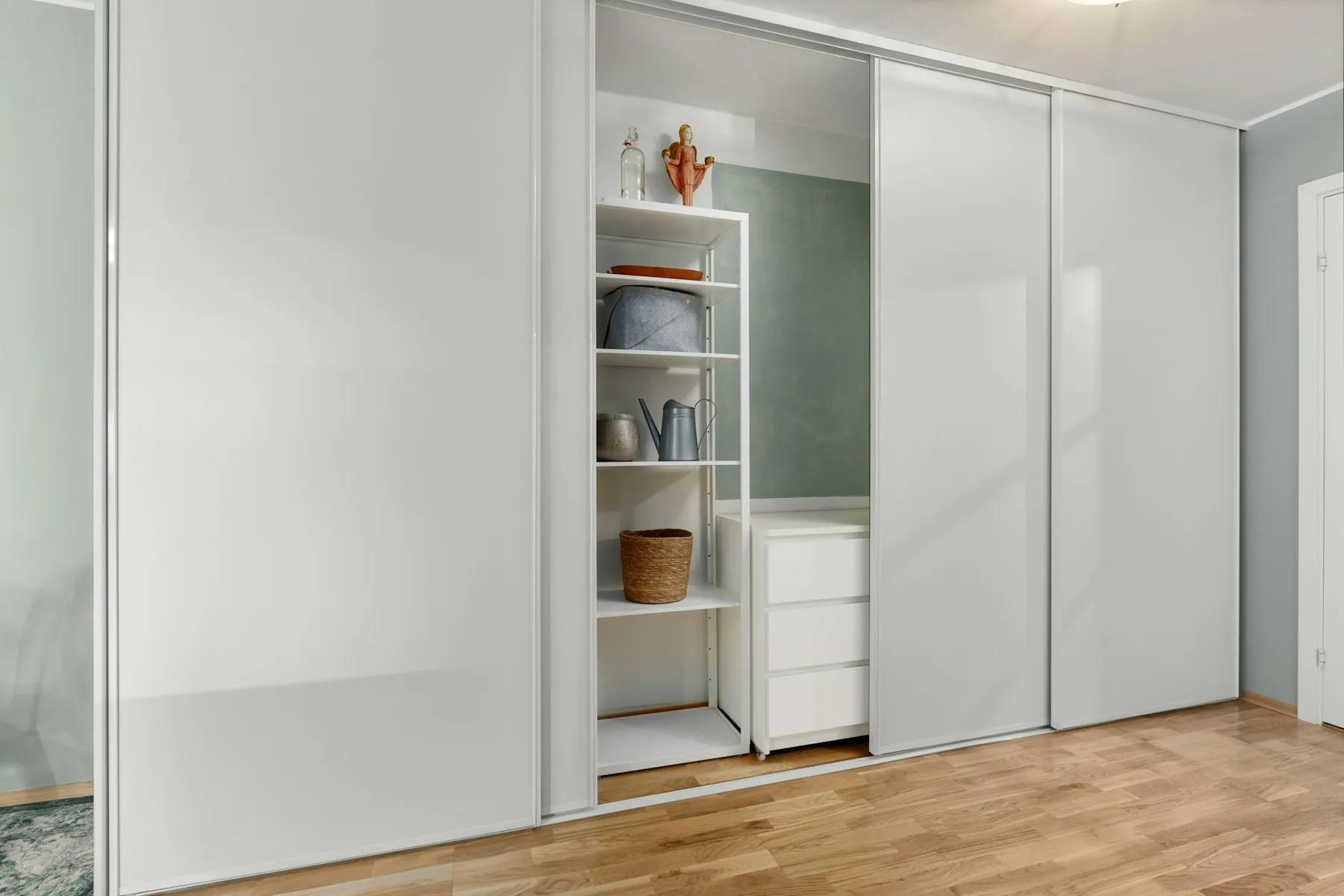
White floor-to-ceiling sliding wardrobe with one door open to shelves inside

06FAQ

Hinged wardrobes: your questions

Which is better, hinged or sliding wardrobe?

Hinged wardrobes give full access to the whole width and have a wider choice of shutter styles, but need floor space for the doors. Sliding wardrobes save floor space but open only part of the front at a time. It depends on your room.

Which wardrobe shutter lasts longest?

Laminate on good board is a very durable choice, resisting scratches and moisture. Veneer and PU paint need a little more care, and acrylic shows marks more. Sealed edges and good hinges matter as much as the surface.

How many hinges does a wardrobe door need?

Two for a short door, three for a tall one. A tall, heavy shutter on two hinges can sag over time, so we specify enough hinges for the weight.

Do soft-close hinges make a difference?

Yes. They stop doors from slamming, reduce wear and are quieter in a bedroom. They are a small cost for a part used many times a day.

What is the standard width of a hinged wardrobe door?

Commonly 450 to 600 mm. We divide the wardrobe width into equal doors so the front looks even, and avoid very wide doors that may sag.

Can a hinged wardrobe fit in a small room?

Yes, if you leave enough floor in front. If not, a sliding wardrobe may suit better. We check the swing against the bed, door and window at the site visit.

Free consultation

Get a free estimate for your hinged wardrobes

Share a few details and we will call you to plan a site visit. The consultation is free.

Want to share budget, size or site photos? Use the full form

Keep exploring

More from Wardrobes & Storage

Jubilant Interior
Free estimate

+91 74089 71354
jubilantinterio740@gmail.com