Skip to content

Wardrobes & Storage

Sliding wardrobe design

A sliding wardrobe uses doors that glide on a track instead of swinging out. That makes it the practical choice where the floor in front of the wardrobe is tight, such as a compact bedroom, a passage or a room where the bed sits close to the wall.We design sliding wardrobes to the full width and height of your wall, then build and install them with our own team.
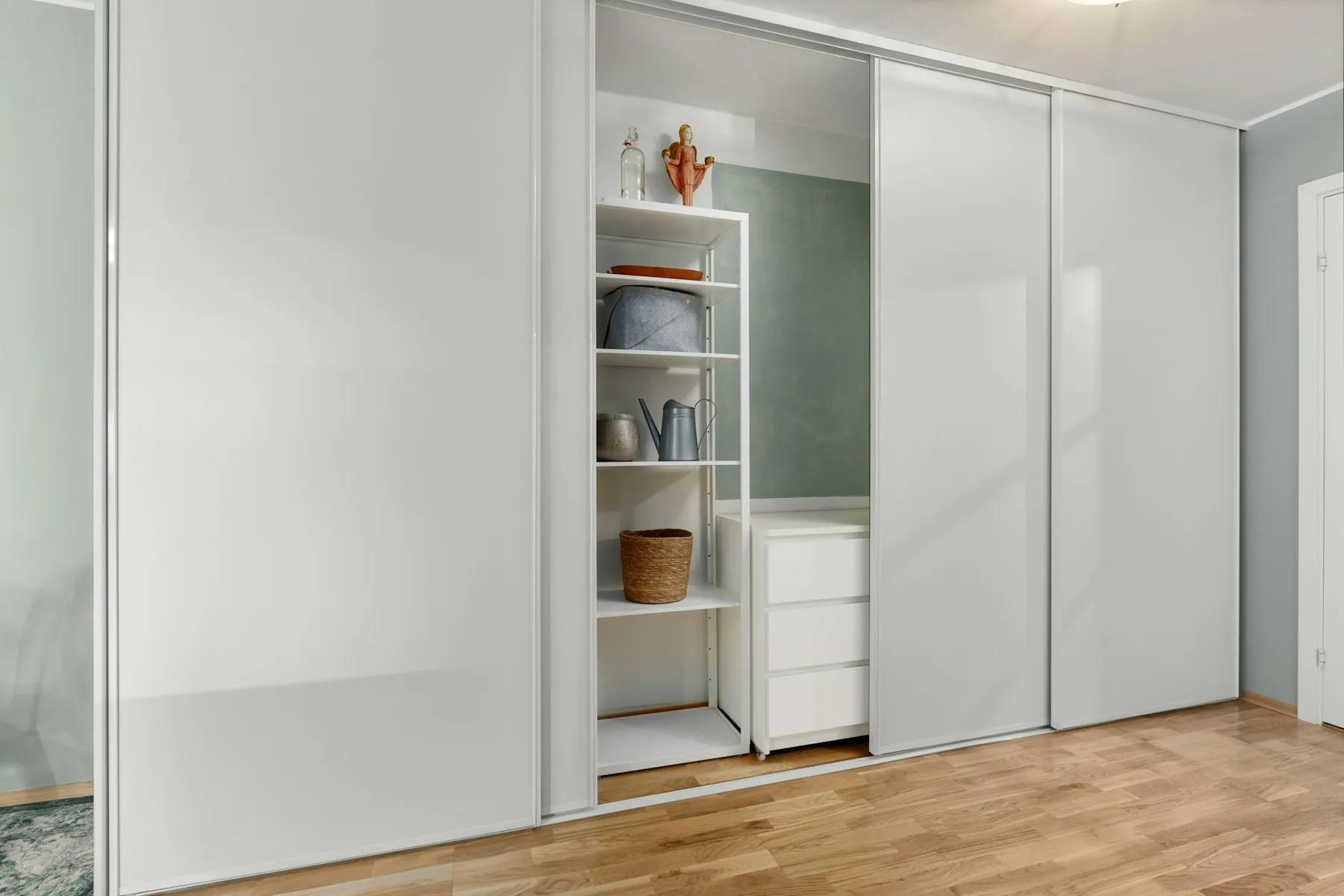
White floor-to-ceiling sliding wardrobe with one door open to shelves inside

01Fit

Is it right for your home?

Works best when

  • Small bedrooms where a swinging door would hit the bed
  • Walls wider than about two metres that suit large, clean door panels
  • Rooms that want a mirror or glass panel on the wardrobe front
  • Modern, minimal interiors with few visible lines
  • Owners who prefer doors that stay out of the way

Worth considering

  • Only part of the wardrobe is open at one time, since the doors overlap on the track.
  • The track and rollers are the most-used parts, so quality matters.
  • Doors can be heavy, particularly mirror and glass, and need a good frame.
  • A sliding wardrobe is a little deeper at the front because of the track system.
  • Corner and L-shaped layouts are harder with sliding doors and may suit hinged ones.

02Design ideas

Ideas to start from

  • Full-height mirror doors

    One or two mirror panels make a small room feel larger and double as a dressing mirror.

  • Frosted or tinted glass panels

    Light is allowed through while contents stay softly hidden. Good for a bright, modern look.

  • Laminate with a slim profile

    Plain or woodgrain laminate in a thin aluminium frame, for a quiet, practical result.

  • Three-door layout with a loft

    A wide wardrobe with three sliding panels and a loft above holds a full household's clothes.

  • Mixed panels

    A combination of laminate, mirror and glass gives the wall some rhythm.

  • Handleless doors

    Recessed or profile handles keep the front flat and the room calm.

  • Open niche beside the doors

    A short open shelf at the end of the run takes a lamp, books or decor.

  • Internal fittings

    Pull-out trouser racks, drawers, belt holders and a jewellery drawer make the inside work harder.

03Materials

Materials and finishes

Carcass
Good plywood or a moisture-resistant board, with sealed edges. The frame must be rigid so the doors do not rub.
Door panels
Laminate on board, tempered glass, mirror, acrylic or veneer. Glass and mirror should be toughened and safe-backed.
Frame and track
Aluminium frames and a sturdy top and bottom track with quality rollers. A soft-close mechanism slows the door as it ends.
Handles
Recessed channel handles or slim profile handles that do not catch on clothes or snag the door.
Interior
Light-coloured laminate inside, drawers with soft-close channels and a sturdy hanging rail.

04Planning

Sizing and planning notes

Door width
Sliding panels are commonly 600 to 1,000 mm wide. Wider panels give a clean look but are heavier. A 1.8 metre wardrobe commonly uses two doors.
Access
With two doors, you can open about half the width at a time. Three doors give narrower openings. Put the most-used items behind the panels you open most.
Depth
A standard wardrobe is about 600 mm deep. The track system takes a little extra at the front, so check the depth with the supplier.
Height and loft
Doors commonly run about 2,100 mm. A loft above uses the rest of the wall and is usually hinged for easier access.
Floor and wall
The floor and the ceiling line must be level, since sliding doors show every slope. We measure these at the site visit.

05Inspiration

Illustrative photos to show styles and ideas. They are not our completed projects.
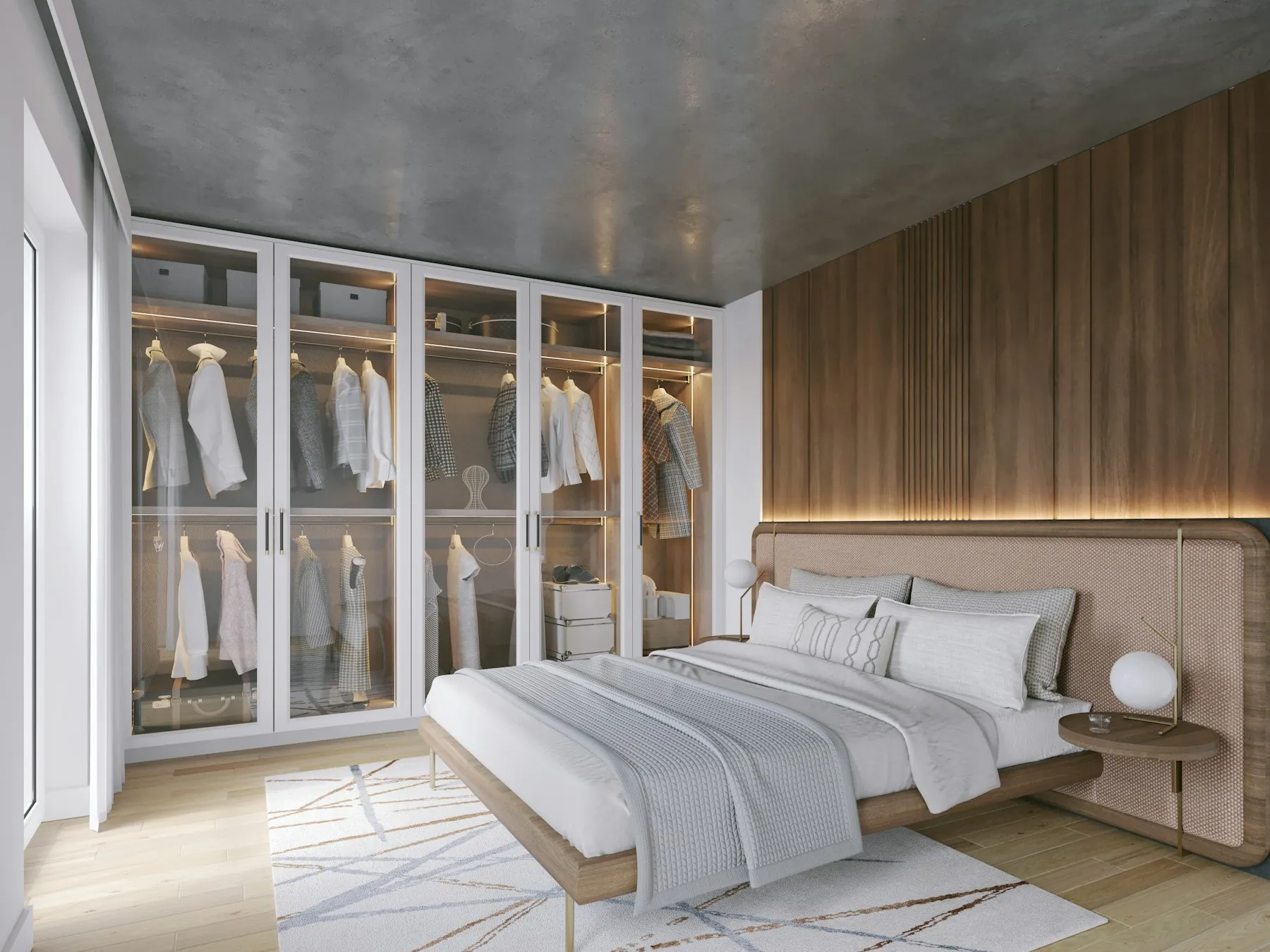
Bedroom with a full wall of glass-shutter wardrobes, lit from inside, beside a timber-panelled bed wall
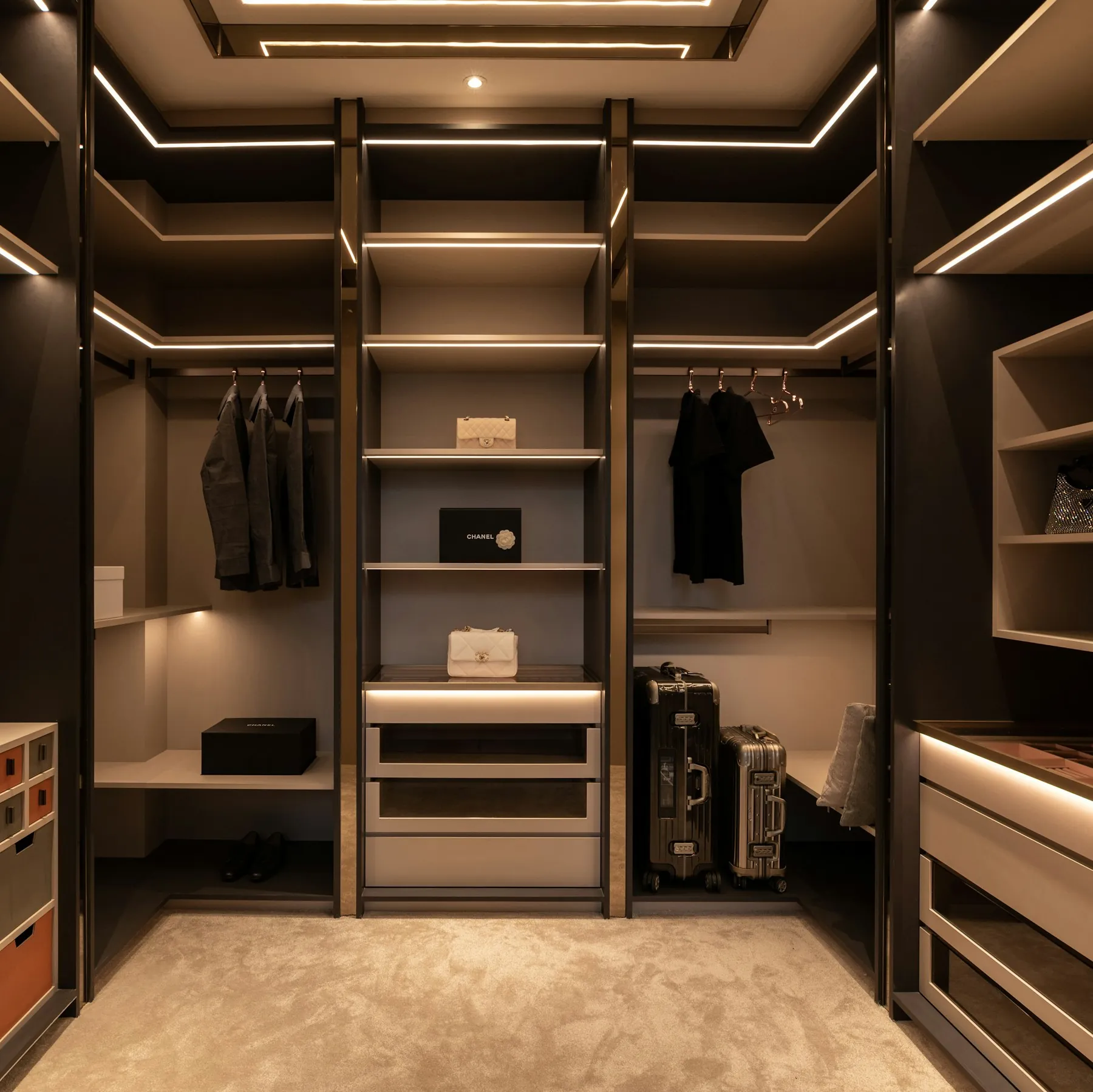
Walk-in wardrobe with open hanging rails, drawers and warm strip lighting
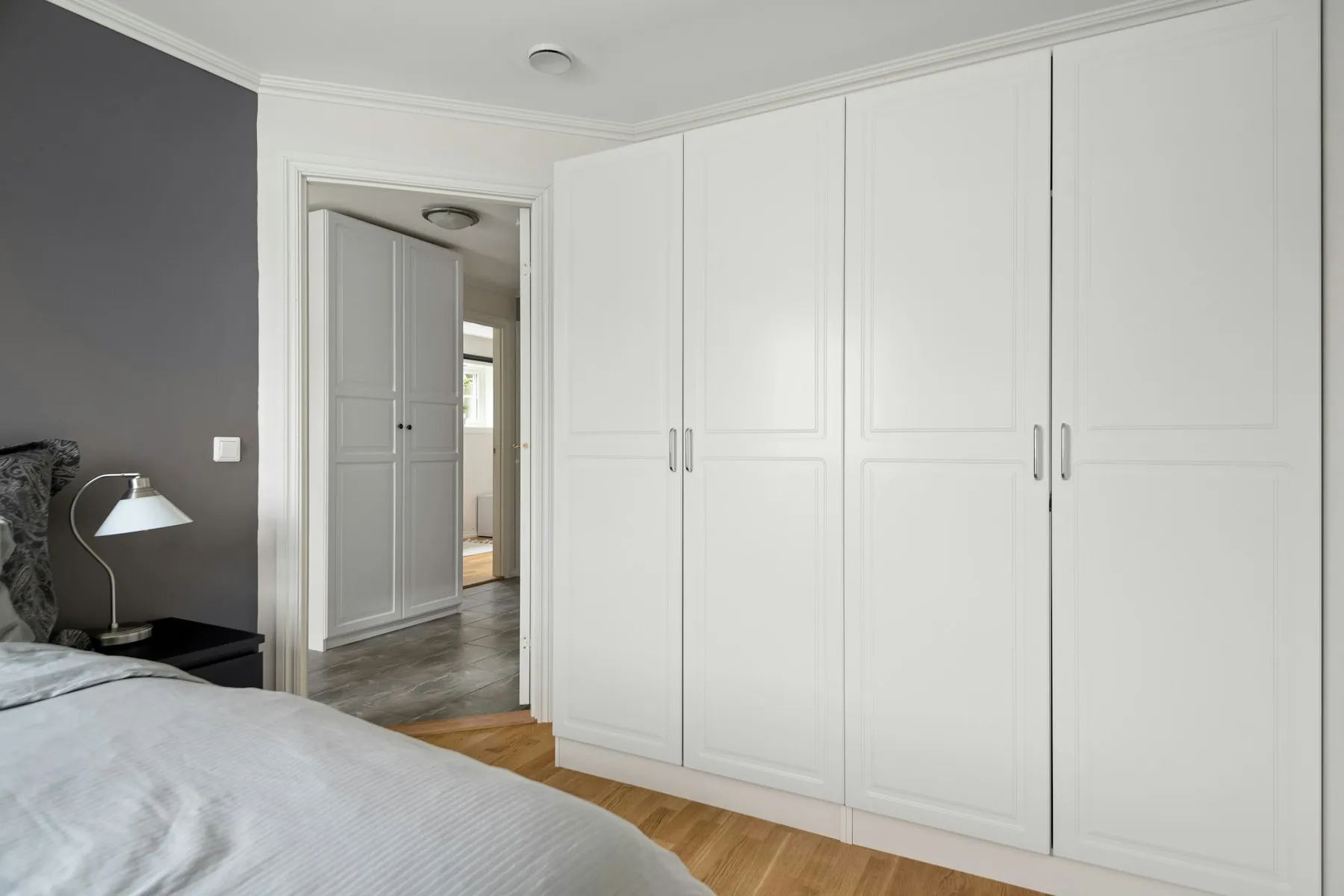
White hinged-door wardrobe with panelled shutters along a bedroom wall

06FAQ

Sliding wardrobes: your questions

Is a sliding wardrobe better than a hinged wardrobe?

Sliding wardrobes win where floor space is tight, because the doors do not swing. Hinged wardrobes open the full width and are simpler. Neither is better in every room, and we plan to yours.

Do sliding wardrobes get stuck over time?

They can if the track is poor or collects dust. A good track, quality rollers and an occasional wipe of the groove keep the doors gliding. A level floor helps too.

Can I use a mirror on a sliding wardrobe?

Yes, toughened mirror panels are common. They add light and a dressing mirror. They are heavier, so the frame and track need to be built for the weight.

Which shutter lasts longest on a sliding wardrobe?

Laminate in an aluminium frame is a durable, low-maintenance choice. Glass and mirror are long-lasting but heavier and show fingerprints. Acrylic gives a seamless look but shows marks more easily.

Is a sliding wardrobe good for storage?

Yes, but you access only part of it at a time. Good internal planning, with the most-used items behind the panels you open often, makes up for this.

Can a sliding wardrobe go up to the ceiling?

Yes. A floor-to-ceiling run with a loft above is a common arrangement, and gives the most storage from the wall.

Free consultation

Get a free estimate for your sliding wardrobes

Share a few details and we will call you to plan a site visit. The consultation is free.

Want to share budget, size or site photos? Use the full form

Keep exploring

More from Wardrobes & Storage

Jubilant Interior
Free estimate

+91 74089 71354
jubilantinterio740@gmail.com